The 10 PM Rule: How to Game at Night Without Wrecking Your Sleep

Listen, I've been there. You're in the middle of a ranked match, the adrenaline is pumping, and suddenly it's 1:47 AM on a Tuesday. You have a meeting in seven hours. You tell yourself "just one more round"—and suddenly it's Wednesday.
We talk a lot about ergonomics in this space. The chair, the desk, the wrist angle. But we don't talk enough about the chronological ergonomics of gaming—how the when matters just as much as the how. And if you're gaming past 10 PM with a standard LED monitor blasting 6500K blue-white light into your retinas, you're basically telling your brain that it's noon in July.
The Science Your Backlog Doesn't Want You to See
Here's what the peer-reviewed research actually says—and it's not great for the "one more game" crowd.
A systematic review published in PMC confirms what we've all suspected: blue light emitted by electronic devices suppresses melatonin secretion. Melatonin isn't just a sleep aid you buy at CVS; it's the hormone that regulates your circadian rhythm. When you stare at a bright screen after sunset, you're quite literally hacking your body's wind-down protocol.
The Sleep Foundation puts it bluntly: "The most effective way to reduce exposure to blue light in the evening is to simply turn off the sources."
(Yeah, I know. You weren't hoping to hear that. Neither was I.)
But I'm Not Going to Tell You to Stop Gaming
Because that's not realistic, and it's not sustainable. The solution isn't to become a morning gamer (though if you can, more power to you). The solution is to build a ritual around your evening sessions that respects your biology while still letting you clutch that 1v3 in Valorant.
Here's the "10 PM Rule" I've been experimenting with for the last three months—and the results have been significant enough that I'm making it a permanent part of the Gamer Life philosophy.
The 10 PM Rule: A Framework for Evening Gaming
1. The Lighting Pivot (9:45 PM)
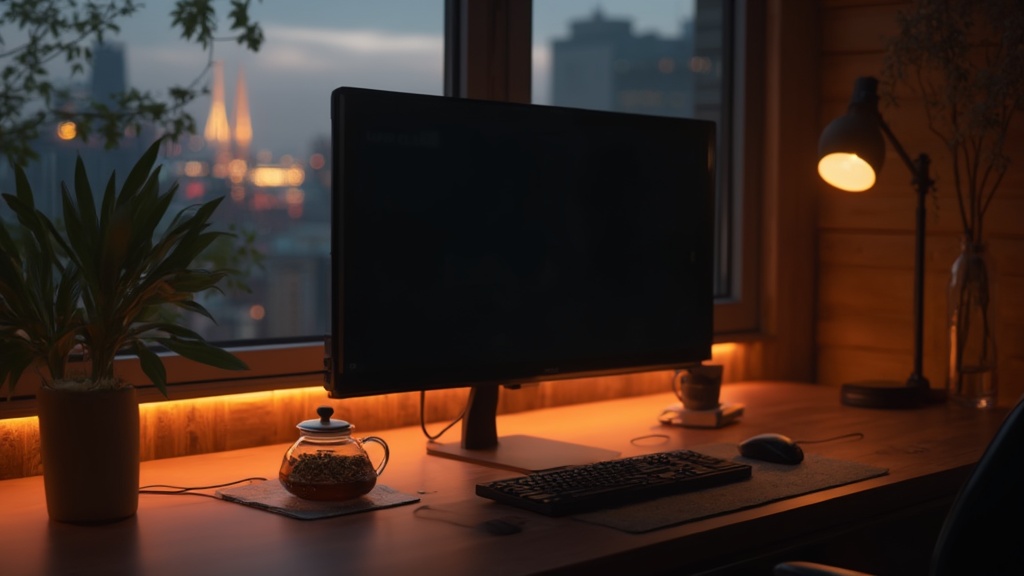
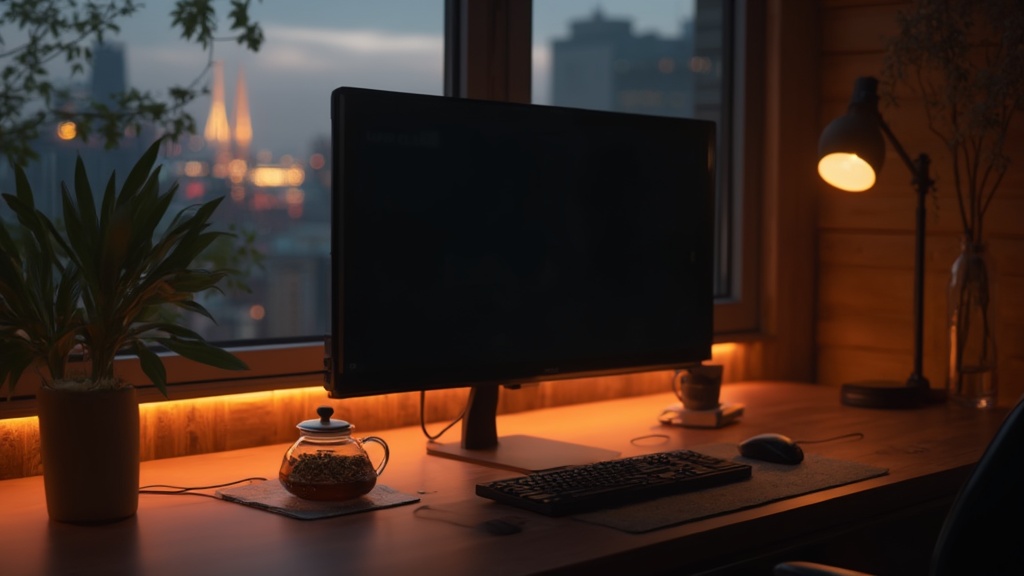
Fifteen minutes before you intend to wind down, kill the overhead lights. Switch your desk setup to warm ambient lighting exclusively—2700K or lower. If you have bias lighting behind your monitor (and you should), make sure it's set to amber or deep orange, not white or RGB cycle mode.
This isn't aesthetic preference. This is signaling to your suprachiasmatic nucleus (the part of your brain that runs your internal clock) that the sun is setting. You're meeting your biology halfway.
2. The Blue Light Filter, But Actually Used Correctly
Yes, enable Night Shift on macOS, f.lux on Windows, or the equivalent on your GPU drivers. But here's the thing most people miss: these tools only work if you don't override them. Don't set them to "sunset to sunrise" and then disable them because "the colors look weird in this game."
The colors should look weird. That's the point. You're supposed to feel slightly uncomfortable with bright whites at 11 PM. It's a feature, not a bug.
3. The Hard Stop (10:00 PM)
This is the controversial one. At 10 PM, you finish the round you're in. You don't start matchmaking again. You don't queue for "just one more." You finish, you say "GG," and you initiate your wind-down sequence.
Does this mean you can only game until 10 PM? No. It means you stop competitive gaming at 10 PM. The adrenaline spike from ranked play is the enemy of sleep. But a chill co-op session with friends? A narrative-driven single-player game where you can pause? A visual novel? Those can continue—with the right lighting and screen settings.
4. The Replacement Ritual
The hardest part of stopping isn't the stopping—it's the void that follows. If you don't have something intentional to do after you close the game, you'll just reopen it.
Here's my move: I brew a pot of Pu-erh tea (lower caffeine, naturally calming) and spend twenty minutes updating my Notion backlog board. It's a low-stimulation activity that bridges the gap between "high-octane gaming" and "actual sleep."
Other options: reading on an e-ink device, stretching, journaling, or honestly just sitting in the dark with your thoughts. Radical, I know.
The ROI of Protecting Your Sleep
Let's talk numbers, because I know some of you are thinking "but my K/D will suffer if I stop at 10 PM."
Sleep deprivation doesn't just make you tired—it tanks your reaction time, working memory, and decision-making speed. A study on esports athletes found that even moderate sleep restriction significantly impaired cognitive performance in competitive gaming scenarios.
So yes, you might play fewer hours. But you'll play better hours. And more importantly, you'll actually remember the games you play, instead of sleepwalking through them in a haze of melatonin suppression and cortisol spikes.
What This Looks Like in Practice
Here's my actual evening right now:
- 7:00 PM: Dinner, cleanup, partner time.
- 8:30 PM: "Serious" gaming session begins. Ranked, competitive, whatever needs focus.
- 9:45 PM: Lighting pivot. Overheads off, bias lights to amber.
- 10:00 PM: Hard stop on competitive. Finish current round, no new queues.
- 10:00–11:00 PM: Chill session. Co-op with friends, or a narrative game, or honestly just talking in Discord while doing something low-stimulation.
- 11:00 PM: Screens off. Tea, stretching, maybe reading.
- 11:30 PM: Sleep.
Is this less gaming than my "just one more round until 2 AM" era? Absolutely. Do I feel better, play better, and actually enjoy the hobby more? Also absolutely.
The Honest Truth
Look, I'm not going to pretend this is easy. Gaming is designed to be endless. The "one more round" dopamine loop is intentional, and it's powerful. Breaking that loop requires intentionality and, frankly, a little bit of discipline that most of us don't want to admit we need.
But here's the thing: you're not a "fake gamer" for prioritizing your health. You're not "casual" for stopping at a reasonable hour. You're an adult who recognizes that sustainable passion requires boundaries.
The 10 PM Rule isn't about restriction. It's about preservation—of your sleep, your mental health, and your actual ability to enjoy this hobby long-term.
Your future self—the one who isn't dragging through work meetings and snapping at their partner because they're underslept—will thank you.
What's your evening gaming ritual? Do you have a hard stop, or are you still in the "one more round" camp? Drop a comment—I read every one, and I'm genuinely curious how the community is handling the sleep vs. gaming balance.