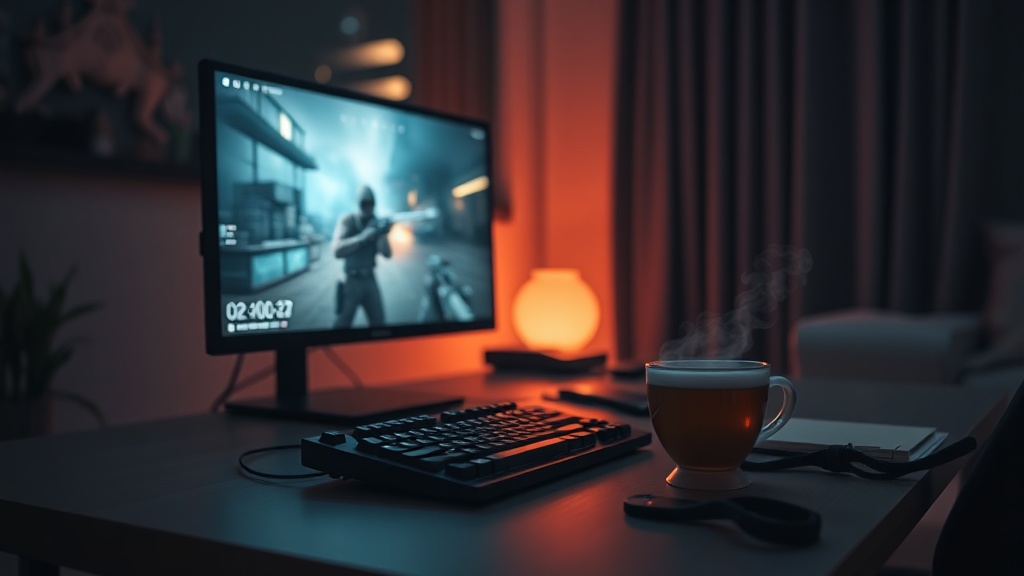
The Burnout Cycle: When Your Main Game Becomes Your Worst Enemy

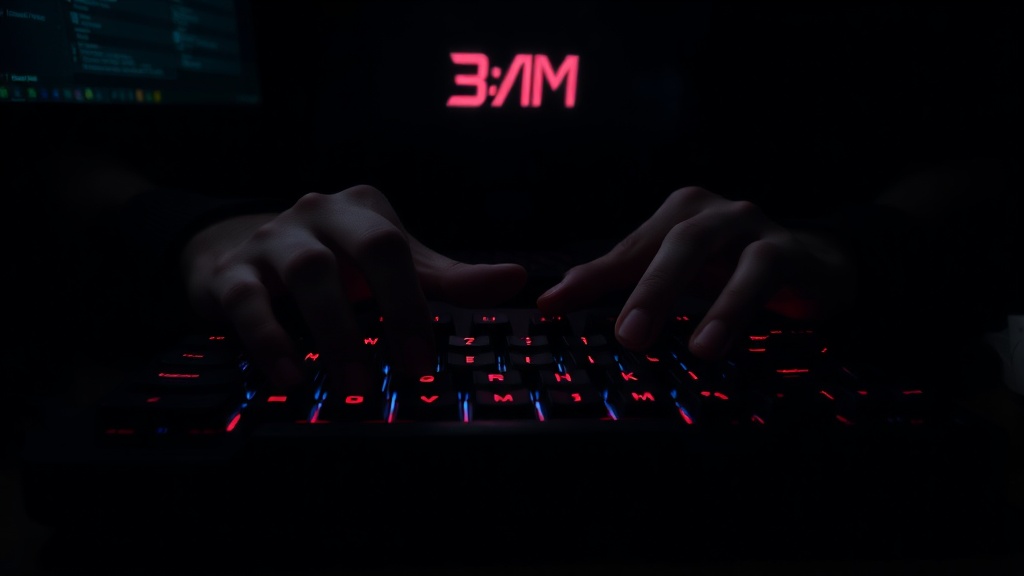
I want to tell you about 3 AM in a Chicago studio apartment, the kind of night where the glow of your monitor is the only light and you've been in ranked queue for seven hours straight. Your wrists are burning. You just went 11-19. You're tilted beyond recovery. And instead of logging off, you click "Accept" again.
That was me. For years. And I'm only writing this now because I finally understand what was actually happening — and it wasn't dedication. It was a trap.
The Moment You're Playing to Not Lose
There's a specific feeling competitive gamers know but almost never name: the shift from playing to win to playing to not quit. It happens gradually, then all at once.
Early CS:GO for me was pure. I loved the economy, the angles, the micro-adjustments on dust2, the way a good smoke could swing an entire round. I was genuinely curious about the game, and that curiosity made me better.
Then somewhere around year three, something flipped. I wasn't playing for the joy of it. I was playing because my rank defined me, because I'd told people I was going to make it, because I'd already put in so many hours that stopping felt like admitting defeat. The game I loved had become a job I was bad at and couldn't quit.
Watch for these warning signs — I had all of them:
- Playing past midnight because you "have to" — not because you want to. There's a difference between losing track of time in flow state and staring at a queue timer at 2 AM telling yourself "one more win."
- Declining performance despite increased time — the grind paradox. The worse you play, the more you play, which makes you play worse. Tilted minds make bad reads.
- Mood tied entirely to session outcome — when a loss follows you into the next day, into conversations with people you love, into your sleep.
- Wrist pain you're ignoring — I'm being very specific here. I dismissed my first RSI symptoms for eighteen months. Eighteen months. Because stopping felt like giving up.
- The resentment creep — when people around you try to spend time with you and your first feeling is irritation at the interruption.
That last one is the one I'm most ashamed of.
Why the System Is Designed to Break You
Here's something the esports media ecosystem will never say out loud: whether by design or emergent consequence, ranked systems function as near-perfect engines for the psychology that creates burnout.
The ELO ladder is a near-perfect variable reward machine. You're always close to the next rank. A win streak feels like momentum you can't waste. A loss streak is a debt you have to repay. There's no natural stopping point built into the design — every session ends mid-ladder, and the next rung is always visible.
Esports culture layers on top of this with mythology. The grind narrative. "10,000 hours." Clips of pros talking about playing 14-hour days. The implicit message: if you're not suffering, you're not serious. Rest is weakness. Logging off is surrender.
I believed this. I bought in completely. And the culture found me exactly where I was — young, hungry, and not yet experienced enough to recognize sunk cost thinking when it was eating me alive.
The math nobody wants to do: 40 hours per week, 52 weeks per year, five years. That's 10,400 hours. Not toward a skill that compounds into a career, not into relationships or physical health or financial stability — into a rank in a game Valve replaced wholesale with CS2 in September 2023 — the servers, the competitive history, the MMR I'd bled for, all sunsetted.
I'm not saying those hours were worthless. Game sense, communication under pressure, pattern recognition — I use these. But I am saying: the form those hours took, the way I burned them, cost me more than the hours themselves.
What the Grind Actually Cost
My RSI started in 2021. I ignored it until 2022. By then I'd developed tendinitis in my right forearm that required physical therapy and still flares up when I overdo it. I am 29 years old with a repetitive strain injury. That's the physical toll.
The relationship ended in spring of 2023. It wasn't just the gaming — it was what the gaming represented: a consistent, daily signal that the queue mattered more than the person sitting in the same apartment. She was patient for a long time. Longer than I deserved. When she finally said she was done, she didn't yell. She was just tired. That quiet exhaustion on her face is something I carry.
There were also the invisible costs. Fitness that slipped. Sleep debt that accumulated. Social invitations I declined because I had "sessions." A data entry job I stayed in two years longer than I should have because leaving it would have required energy I was putting somewhere else.
I'm not writing this for sympathy. I'm writing it because every one of these costs was avoidable, and I want you to recognize the patterns before you get the bill.
The Exit Strategy (And Why It's Not Quitting)
The day I finally logged off for good — not rage-quit, not "taking a break," but actually decided I was done with the pro dream — felt like failure for about a week.
Then it felt like relief.
There is a difference between quitting and making a deliberate decision that this is no longer the right thing for you. The culture doesn't give you language for the second thing. It calls everything the first thing, because if you can be convinced to call it failure, you'll keep grinding to prove otherwise.
Here's what actually helped me rebuild:
The 2-hour rule, applied with real commitment. Not "I'll try to stop at 2 hours." A hard stop. Timer goes off, I finish the current round, I'm done. This felt impossible the first week and automatic by month three. The sessions I have now are consistently higher quality — I'm focused, not depleted.
Playing different types of games. I got obsessive about co-op games. Games with endings. Games where I could make progress without competition. This broke the ranked anxiety loop and reminded me that I actually like interactive storytelling, exploration, problem-solving. CS:GO had made me forget games could do other things.
Being honest about what competitive gaming is for me now. I still play. I still care about getting better. But it's part of my life, not the organizing principle of it. The Oolong is ready before I queue. The wrist braces are on the desk if I need them. The session ends when I said it would.
The bravest thing I ever did was close the game, not open it again, and build a life that makes the game worth coming back to.
The Real Question
I've been thinking a lot lately — especially after writing about women in esports earlier this week (March 4) — about how much raw talent the competitive scene burns through and throws away. Male, female, any background. The grind culture doesn't discriminate in who it damages.
How many people who loved this thing had that love scraped out of them by a system that treats exhaustion as dedication? How many people could have been great — not just good, actually great — if they'd been taught to rest strategically instead of grind endlessly?
I don't know the number. I know it's significant.
If you're reading this and recognizing the pattern I described — the 3 AM queue acceptance, the wrists you're ignoring, the mood you're taking to bed — I want to be direct with you: that's not commitment. That's a slow emergency.
The game will be there tomorrow. You only get one set of wrists. Some relationships don't survive five years of being third priority.
Log off. Not forever. Just tonight.
Elias Vance plays CS2, Valorant, and whatever co-op game his friends are into this month — in that order, for exactly as long as his timer allows. His wrists are still works in progress.