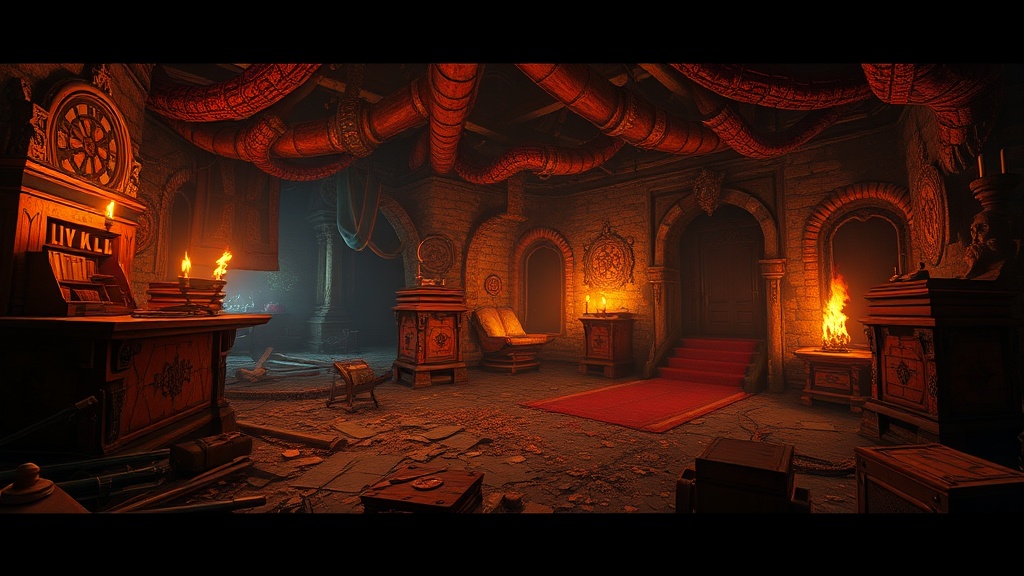
The Digital Archeology of Modding: Reviving Dead Games with Community Passion

You will learn how community-driven modding acts as a form of digital preservation, the technical processes used to revive aging software, and how these grassroots efforts sustain gaming legacies long after official support has ceased.
The Lifecycle of a Digital Artifact
In the traditional software lifecycle, a game follows a predictable trajectory: development, peak commercial viability, and eventually, obsolescence. When a developer stops issuing patches and the servers go dark, the game enters a state of digital decay. This decay isn't just about a lack of new content; it is a technical degradation caused by hardware evolution. Modern operating systems, such as Windows 11, often struggle to execute legacy code designed for Windows XP, and modern high-refresh-rate monitors can break the physics engines of older titles.
Digital archeology, or modding-driven revival, is the process of intervening in this decay. It involves more than just adding new skins or maps; it requires a deep understanding of the original game's architecture to ensure it remains playable on contemporary hardware. This is the difference between a superficial cosmetic change and a fundamental structural restoration.
The Technical Layers of Preservation
Reviving a game requires addressing three distinct layers of technical friction: compatibility, stability, and scalability. Each layer demands a specific set of skills and tools to ensure the experience remains faithful to the original intent while functioning in a modern environment.
- Compatibility Layers: Many older games rely on DirectX 7, 8, or 9. Modern GPUs are optimized for DirectX 11, 12, or Vulkan. Modders use wrappers like dgVoodoo2 or DXVK to translate these older API calls into something a modern graphics card can understand without crashing.
- Resolution and Aspect Ratio Correction: Older titles were often hardcoded for 4:3 aspect ratios. Modders must go into the game's configuration files or use custom scripts to allow for 16:9 or 21:9 ultrawide support, ensuring the image isn't stretched or distorted.
- Engine Re-implementation: The most ambitious form of archeology involves rebuilding the engine itself. The OpenMW project, for example, is a complete re-implementation of the Morrowind engine, allowing the game to run natively on Linux, macOS, and even Android devices.
Case Studies in Community-Driven Longevity
To understand the scale of this impact, one must look at specific titles that would be unplayable today without the intervention of dedicated enthusiasts. These are not merely "mods" in the sense of a new texture pack; they are comprehensive structural overhauls.
The Elder Scrolls Series and the Engine Evolution
Bethesda’s The Elder Scrolls III: Morrowind serves as a primary example of how community passion can extend a game's lifespan by decades. While the original game is a masterpiece of world-building, its technical limitations are glaring by modern standards. The OpenMW project has done more than just make the game run on modern hardware; it has optimized memory management and stability to a degree that the original developers never achieved. This allows players to experience the depth of the world without the constant threat of "CTD" (Crash to Desktop) errors that plagued the original release.
This level of dedication is a key reason why retro RPGs are making a massive comeback in 2024. Players are returning to these worlds not just for nostalgia, but because the community has polished the experience into something that feels modern and stable.
The Source Engine and the Modding Ecosystem
Valve’s Source Engine created a culture where the distinction between "player" and "developer" becomes blurred. Counter-Strike began as a mod for Half-Life, and the legacy of that era continues through projects like Counter-Strike: Source and various community-maintained versions of Team Fortress Classic. These communities do more than just play; they maintain custom matchmaking systems, anti-cheat protocols, and server architectures that keep the competitive spirit alive long after the original developers have moved on to newer titles.
The Tools of the Digital Archeologist
If you are interested in moving beyond being a consumer and into the role of a preservationist, you must familiarize yourself with the toolkit used to manipulate and restore legacy software. This is a disciplined pursuit that requires both creativity and technical rigor.
Reverse Engineering and Hex Editing
At the most granular level, digital archeology involves hex editing. This is the process of opening a game's binary files in a hex editor—such as HxC or 010 Editor—to manually change specific values. For instance, if a game's maximum field of view (FOV) is hardcoded to 70 degrees, a modder can locate the specific hex string representing that value and change it to 90, fundamentally altering the player's perspective and modernizing the feel of the movement.
Asset Extraction and Re-authoring
Many older games use proprietary file formats that are not easily accessible. Tools like Dragon Unarchiver or specific community-made extractors are used to pull textures, 3D models, and audio files from these archives. Once extracted, these assets are re-authored in modern software like Blender (for 3D modeling) or Substance Painter (for texturing) before being re-injected into the game. This process is what allows a game from 2004 to have high-definition textures that look sharp on a 4K monitor.
Scripting and Logic Overhauls
Modernizing a game often requires changing how the game "thinks." This involves writing scripts in languages like Lua or Python, or using built-in scripting engines like Papyrus (used in the Fallout and Skyrim series). A modder might write a script to fix a broken quest trigger or to implement a new combat mechanic that relies on modern input methods, such as controller vibration or mouse sensitivity curves.
The Ethical Responsibility of the Modder
With the power to reshape a game comes a significant ethical responsibility. The community of digital archeologists operates under a set of unwritten rules designed to preserve the integrity of the original work while pushing its boundaries.
The first rule is Respect for the Original Intent. A successful revival doesn't try to turn a 1998 tactical shooter into a 2024 battle royale. Instead, it seeks to clarify and enhance the original vision. The goal is to remove the technical barriers that prevent the player from experiencing what the developers intended.
The second rule is Documentation and Transparency. Because much of this work involves reverse engineering, it is vital to document the methods used. This ensures that when a modder moves on to a new project, the next person in the community can pick up the mantle. This is how knowledge is passed down, ensuring that the "archeology" is a continuous cycle rather than a series of isolated events.
The Human Element: Why We Do It
Why do people spend thousands of hours fixing bugs in games that no longer make money? The answer lies in the connection between the person and the digital space. For many, these games are more than just software; they are repositories of memory. They represent a specific era of one's life, a specific way of interacting with the world, and a specific community of friends.
When we engage in digital archeology, we are not just "fixing a game." We are ensuring that the cultural milestones of our medium do not vanish into the void of incompatible hardware and broken links. We are building a bridge between the past and the future, ensuring that the stories told in code remain accessible to the generations that follow.
Whether you are a player looking for a more stable experience or a developer looking to understand the roots of your craft, look toward the modding communities. They are the keepers of the flame, ensuring that the digital worlds we love never truly die.