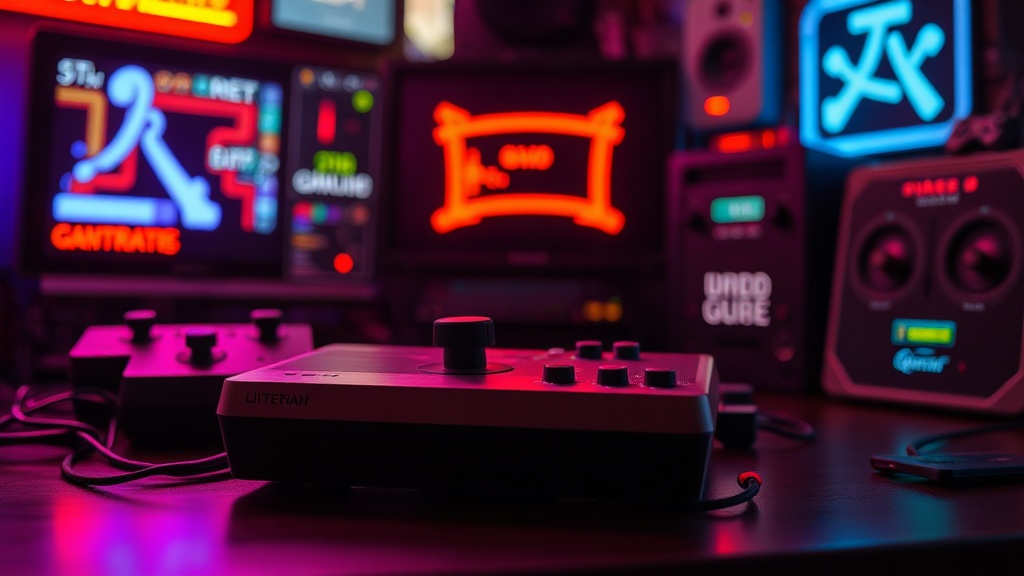
Why Retro Gaming Hardware Still Matters in a Digital World

The prevailing assumption in modern gaming is that digital emulation is the superior way to experience classic titles. Many enthusiasts believe that running a ROM on a high-end PC via RetroArch or a specialized emulator provides the most "authentic" experience because it offers higher resolutions, frame rate stability, and save states. This is a misconception. While emulation is a powerful tool for accessibility, it often fails to capture the physical and sensory nuances of the original hardware. This post explores why investing in original consoles and peripherals remains a vital practice for collectors and enthusiasts, focusing on the tactile feedback, visual accuracy, and the preservation of the actual gaming experience.
The Tactile Reality of Original Hardware
Emulation can replicate a game's logic, but it struggles to replicate its physics. When you play a game like Street Fighter II on a modern keyboard or a generic USB controller, you are missing the specific tension and travel distance of the original arcade sticks or the Nintendo 64's analog stick. The physical resistance of a button press is a fundamental part of the gameplay loop. For instance, the heavy, deliberate click of a Sega Genesis controller offers a different rhythmic input than the lightweight, membrane-based buttons found on many modern third-party replacements.
This tactile feedback is not just about nostalgia; it is about precision and muscle memory. If you are practicing high-level inputs, the latency introduced by a USB polling rate on a modern PC can subtly alter your timing. Original hardware operates on a direct, non-abstracted connection between the input device and the system. This directness provides a sense of "connection" to the game that software layers often obscure. If you are looking to refine your technical skills, understanding the physical limits of your hardware is the first step.
The Importance of Display Accuracy
One of the biggest mistakes enthusiasts make is playing classic games on a modern 4K LED monitor or a high-refresh-rate gaming display. Modern LCD and OLED screens are designed to render sharp edges and high contrast, which can actually make older games look jagged, blurry, or visually "broken." Original hardware was designed to be used with Cathode Ray Tube (CRT) televisions. The natural phosphor glow and the way the electron beam scans the screen create a specific look that digital filters can only approximate.
CRTs provide several technical advantages that modern displays struggle to match:
- Motion Clarity: The way a CRT handles motion blur is fundamentally different from the "sample-and-hold" motion blur of modern LCDs. This results in much smoother movement in fast-paced titles like Sonic the Hedgehog.
- Built-in Smoothing: The natural scanlines of a CRT act as a low-pass filter, smoothing out pixelated edges and making the graphics feel more cohesive and organic.
- Input Lag Reduction: Because there is no digital processing or frame-interpolation happening between the console and the screen, the response time is nearly instantaneous.
If you cannot source a CRT, investing in a high-quality upscaler like the RetroTINK-5X or the OSSC (Open Source Scan Converter) is a necessary step. These devices translate the analog signal of older consoles into a digital signal that modern displays can handle without losing the aesthetic integrity of the original signal. This is a much more effective way to preserve the intended visual experience than simply turning on a "CRT shader" in an emulator.
The Psychological Benefits of Physical Media
In an era of subscription services and digital storefronts, there is a growing sense of "ownership anxiety." When you play a game through a digital launcher, you are essentially licensing the right to access that software. If a server goes down or a storefront changes its terms of service, your library can vanish. This is why starting a digital library collection—or rather, a physical one—is a way to ensure your gaming history remains under your control.
There is a psychological shift that occurs when you physically hold a cartridge or a disc. The act of blowing the dust out of a Super Nintendo cartridge or carefully sliding a PlayStation 1 disc into a tray creates a ritual. This ritual signals to your brain that it is time to transition from the "grind" of modern, live-service gaming into a focused, contained experience. This ritualistic approach helps prevent the burnout often associated with the endless, dopamine-driven loops of modern gaming by providing a clear beginning and end to a session.
Preserving the Full Package
A video game is more than just the code running on a processor; it is a piece of art that includes the packaging, the manual, and the box art. When you play an original copy of The Legend of Zelda: Ocarina of Time, you aren't just playing the game; you are interacting with the physical manifestation of that era's design philosophy. The instructional manuals often contained art and lore that wasn't present in the game itself, providing a deeper layer of immersion that a digital file cannot provide.
Collecting these physical items also fosters a sense of stewardship. You aren't just a consumer; you are a curator of gaming history. This mindset encourages a more respectful and thoughtful relationship with the media you consume. It moves the hobby away from mindless consumption and toward a more intentional, appreciative way of living.
Ergonomics and Longevity in Retro Gaming
Many people overlook the ergonomic implications of older hardware. While modern controllers are often designed with comfort and long-term play in mind, older consoles were often built with much more utilitarian, sometimes even uncomfortable, shapes. However, there is a certain "honest" ergonomics to older hardware. The buttons are often larger, the sticks are more robust, and the lack of complex haptic feedback means you aren't being distracted by unnecessary vibrations.
When setting up a retro gaming station, consider the following to ensure you are playing sustainably:
- Monitor Height: If using a CRT, ensure the screen is at eye level to avoid neck strain. CRTs are often deeper than modern monitors, which can disrupt your desk layout.
- Peripheral Choice: If you find original controllers uncomfortable, look for high-quality modern alternatives like the 8BitDo series, which offer modern ergonomics while maintaining the aesthetic and button layout of classic consoles.
- Lighting: CRT screens can cause more eye strain in dark rooms due to the flicker and light intensity. Ensure your environment has soft, indirect lighting to mitigate fatigue.
The Value of Intentionality
The reason we still care about a 30-year-old piece of plastic and silicon is that it represents a specific moment in human creativity. Modern gaming is often a massive, interconnected web of microtransactions, battle passes, and constant updates. Retro gaming, by contrast, is a finished thought. When you turn on a PlayStation 1, you know exactly what you are getting. There are no patches, no DLCs, and no unexpected changes to the game's balance.
This "finished" nature of retro games offers a profound sense of closure. In a world where we are constantly chasing the next update or the next level, there is immense value in playing something that is already complete. It allows for a more relaxed, meditative form of play. This is essential for maintaining a healthy balance between your digital life and your physical well-being. By stepping back into the hardware of the past, you aren't just retreating; you are recalibrating.
Whether you are a collector looking to preserve history or a player seeking a more tactile, authentic experience, do not dismiss the original hardware. The effort required to source a console, find a CRT, or track down a physical copy pays dividends in the quality of the experience. It turns gaming from a passive activity into a deliberate, sensory-rich engagement with art.