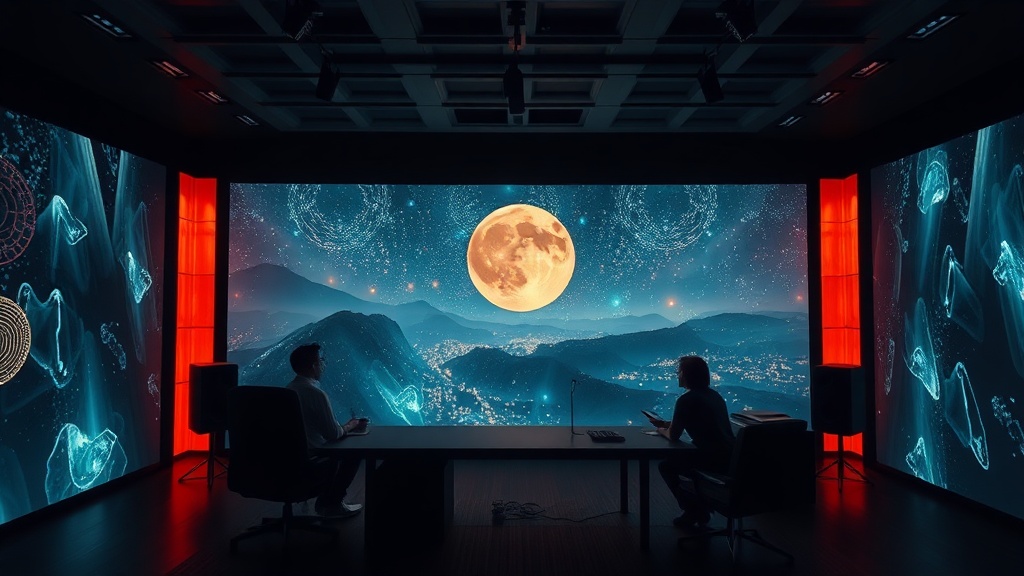
Beyond the Screen: Curating the Perfect Ambient Soundscape for Immersion

The room is silent, save for the rhythmic clicking of a mechanical keyboard. A single monitor glows, casting a cold blue light across a desk cluttered with empty soda cans and half-finished snack bags. The player is mid-raid, leaning forward, eyes bloodshot, focused entirely on the digital battlefield. But something is missing. The tension is high, but the atmosphere is hollow. Despite the high-fidelity graphics of the game, the physical environment feels disconnected from the digital one, creating a sensory rift that eventually leads to mental fatigue.
Immersion is often discussed in terms of frame rates, resolution, or field of view. However, true immersion—the kind that transports you from a cramped apartment to a sprawling fantasy kingdom or a neon-soaked cyberpunk city—is deeply rooted in the auditory environment. Sound is the invisible architecture of a gaming session. When you curate your ambient soundscape, you aren't just playing a game; you are constructing a sensory experience that bridges the gap between your physical chair and the digital world.
The Psychology of Sound and Focus
The human brain is wired to react to sound. Sharp, sudden noises trigger the startle reflex, while low-frequency hums can induce a state of calm or dread. For a gamer, this is a double-edged sword. In competitive scenarios, you need high-frequency clarity to hear footsteps in Counter-Strike 2 or the reload of a weapon in Call of Duty. However, during long-form RPG sessions or immersive single-player journeys, the "noise" of the real world—a neighbor's lawnmower, a passing car, or a humming refrigerator—can break the psychological spell of the game.
By layering intentional ambient sounds over your gameplay, you create a "sonic cocoon." This technique helps mitigate the cognitive load caused by environmental distractions. It allows the brain to enter a state of "flow," where the distinction between the player and the avatar begins to blur. This is particularly vital for players who struggle with the burnout cycle, as a controlled auditory environment can make long sessions feel less draining and more restorative.
Layering Your Soundscape: The Three-Tier Method
To build a professional-grade ambient environment, you should avoid the mistake of simply playing a single YouTube loop. A single track becomes "white noise" very quickly, and the brain eventually tunes it out or, worse, becomes irritated by its repetition. Instead, use a layered approach involving three distinct tiers: the Base, the Texture, and the Accent.
1. The Base Layer: Low-Frequency Stability
The base layer provides the foundation. This should be a consistent, low-frequency sound that masks external environmental noise. Think of it as the "floor" of your audio. Examples include:
- Brown Noise: Deeper and more muffled than white or pink noise, brown noise is excellent for masking heavy traffic or construction sounds.
- Low-End Drone: A deep, cinematic synth pad or a low-frequency hum reminiscent of a starship engine.
- Natural Weather: The steady, heavy thrum of a distant thunderstorm or a constant, light rainfall.
2. The Texture Layer: Mid-Range Character
The texture layer provides the "flavor" of the environment. This is where you match the audio to the genre of the game you are playing. If you are playing a medieval fantasy game like Elden Ring, your texture layer should reflect that world. If you are playing a sci-fi title like Starfield, the texture should be metallic and synthetic.
- Fantasy/RPG: The crackle of a fireplace, the soft rustle of wind through leaves, or the distant murmur of a crowded tavern.
- Sci-Fi/Cyberpunk: The rhythmic hum of a ventilation system, the high-pitched whine of a computer server, or the distant drone of flying vehicles.
- Nature/Adventure: Birdsong, flowing water, or the gentle movement of waves against a shore.
3. The Accent Layer: Occasional Stimuli
The accent layer is the most delicate. These are sporadic, non-repetitive sounds that add realism without being distracting. These should be played at a much lower volume than the Base and Texture layers. For a fantasy setting, this might be the occasional clink of a glass or a distant wolf howl. For a sci-fi setting, it might be a distant electronic beep or a hydraulic hiss.
Tools and Software for Sound Curation
You do not need a professional studio to achieve this. Several high-quality tools allow you to mix these layers in real-time. For a seamless experience, I recommend using dedicated ambient engines rather than standard music streaming services, as music often has melodic shifts that can break immersion.
- Ambient Mixer: This is a highly effective web-based tool that allows you to layer specific sounds (like rain, wind, and footsteps) onto a single canvas. It is perfect for creating a quick "Coffee Shop" or "Deep Space" atmosphere.
- MyNoise.net: Perhaps the most sophisticated tool available, MyNoise offers highly engineered soundscapes. You can adjust individual sliders for different frequencies—for example, increasing the "thunder" while decreasing the "rain"—to tailor the sound to your specific room acoustics.
- Tabletop Audio: Originally designed for TTRPG players, this site offers incredibly high-quality, loopable ambient tracks categorized by setting (e.post, sci-fi, dungeon, etc.). It is an excellent resource for gamers who want a "one-click" solution for a specific theme.
Hardware Considerations: The Delivery System
The best soundscape in the world will fail if your hardware is poorly calibrated. To truly experience these layers, you must consider how the sound is delivered to your ears.
Open-Back vs. Closed-Back Headphones
If your goal is pure immersion in a single-player journey, Open-Back Headphones (such as the Sennheiser HD600 series) are often superior. They provide a wider "soundstage," making it feel as though the ambient sounds are occurring around you in a physical space rather than inside your skull. However, they do not block out external noise. If you live in a noisy apartment, Closed-Back Headphones (like the Beyerdynamic DT 770 Pro) are necessary to ensure your curated soundscape isn't competing with the real world.
The Role of DAC/Amps
If you are using high-impedance headphones, a dedicated Digital-to-Analog Converter (DAC) and Amplifier (such as a FiiO K5 Pro) can significantly improve the clarity of your layers. A cheap onboard motherboard soundcard often muddies the low-end frequencies, which can turn your "Base Layer" into a blurry, indistinct mess rather than a crisp, deep drone.
Practical Application: A Sample Workflow
To illustrate how this works in practice, let's build a soundscape for a session of Cyberpunk 2077. Instead of just playing the game audio, try this setup:
- Set the Base: Open MyNoise and select a "Deep Space/Industrial Drone." Set the volume to 20%. This provides a low-end weight that masks your PC fans and household hum.
- Add the Texture: Layer in a "Rain on Metal" track. Set this to 30%. This adds the gritty, urban feeling essential to the genre.
- Add the Accent: Find a loop of "Distant Neon Sign Buzz" or "Traffic Hum." Set this to 10%. This adds a sense of scale and movement.
- The Game Audio: Keep your in-game volume at a level where you can still hear the dialogue and combat cues, but ensure the "ambient" sounds of the game (which are often thin) are supported by your external layers.
By following this hierarchy, you create a rich, multi-dimensional environment. You aren't just listening to a game; you are inhabiting a world. This level of intentionality in your setup is a hallmark of a sophisticated gamer—someone who understands that the quality of their time spent behind the screen is dictated not just by the software they run, but by the environment they cultivate.