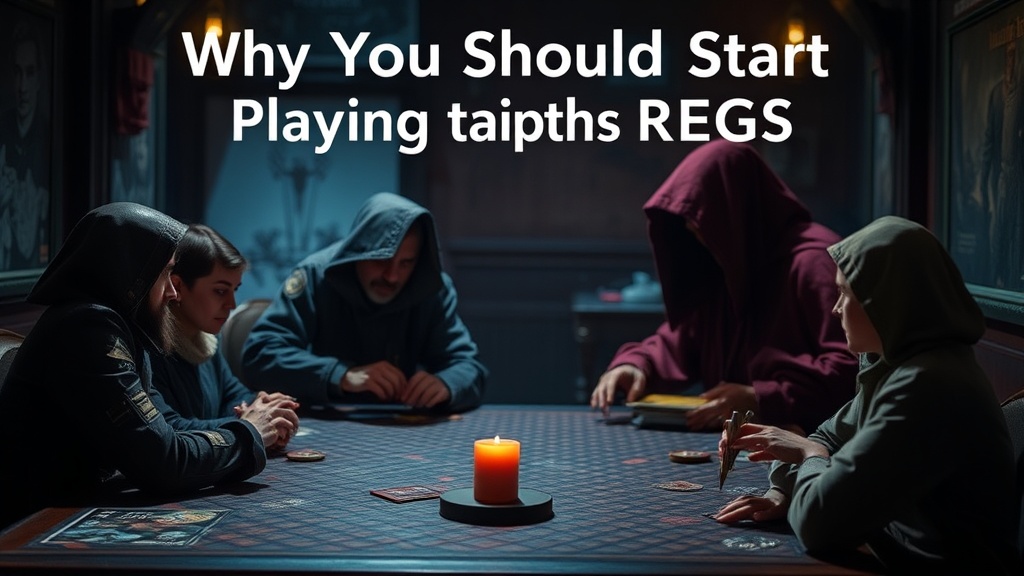
Why You Should Start Playing Tabletop RPGs

Are you looking for a way to engage your creativity without the physical strain of staring at a high-refresh-rate monitor for six hours straight? This guide explores why tabletop role-playing games (TTRPGs) are a vital tool for any modern gamer seeking to prevent burnout, foster deep social connections, and develop high-level problem-solving skills that digital environments sometimes lack. By transitioning from purely reactive gameplay to collaborative storytelling, you can expand your cognitive horizons while giving your eyes and wrists a much-needed break from the desk.
The Cognitive Benefits of Analog Play
While video games excel at testing reaction times and spatial awareness, TTRPGs like Dungeons & Dragons (D&D) or Pathfinder shift the focus toward deductive reasoning and abstract thinking. In a digital RPG, your options are often limited to a pre-programmed skill tree or a specific set of combat animations. In a tabletop setting, the "engine" is your imagination, and the "graphics card" is the collective description of the players and the Game Master (GM).
This shift provides several specific mental advantages:
- Enhanced Creative Problem-Solving: Instead of looking for a "glitch" or a specific exploit in a game's code, you must brainstorm solutions to obstacles. If a door is locked, you aren't just looking for a key; you are deciding whether to pick the lock, bribe the guard, or use a Fireball spell to blast through the wood.
- Improved Social Intelligence: TTRPGs require constant, nuanced communication. You are negotiating with other human beings—both your fellow players and the GM—to steer the narrative. This builds empathy and the ability to read social cues in a way that a headset-only Discord chat rarely does.
- Cognitive Flexibility: Moving between character logic and player logic requires a high degree of mental agility. You are managing complex systems of rules while simultaneously maintaining a persona, which exercises different parts of the brain than the repetitive muscle memory required for high-level competitive play.
Physical Wellness and Ergonomic Relief
As someone who has spent years tethered to a gaming chair, I know the physical toll of long-term digital engagement. The constant tension in the shoulders, the repetitive strain on the wrists, and the inevitable eye fatigue from blue light exposure are real issues. TTRPGs offer a structured way to stay "in the game" while changing your physical posture and sensory input.
When you play a tabletop game, you are often sitting around a dining table or a coffee table rather than a specialized ergonomic desk setup. This change in environment can help break the cycle of "gamer slouch." Furthermore, because the pace of a TTRPG is dictated by conversation rather than frame-perfect inputs, the intensity of the physical engagement is lower. You aren't white-knuckling a mouse or a controller during a high-stakes boss fight, which allows your nervous system to decompress.
If you find it difficult to step away from your PC entirely, consider integrating tabletop elements into your routine. For instance, if you find that your hardware setup is part of your enjoyment, you might appreciate the tactile satisfaction of high-quality mechanical keyboards, which can even be used to manage digital character sheets or roll virtual dice during hybrid sessions.
Building Meaningful Social Structures
Modern gaming can often feel isolating, even when playing in a party. Even in highly communicative games like Final Fantasy XIV or Counter-Strike, the interaction is often transactional: "Heal me," "Watch left," or "Good job." TTRPGs demand a different kind of social contract. You are not just teammates; you are co-authors of a shared history.
The social architecture of a tabletop group is built on long-term consistency. Because these sessions usually happen once a week or once a month, they create a reliable social ritual. This is a stark contrast to the ephemeral nature of matchmaking, where your teammates are strangers who will be gone the moment the match ends. In a TTRPG group, the shared struggle against a difficult dungeon or a complex political intrigue builds genuine camaraderie and lasting friendships.
This social depth extends to the way you handle conflict. In a competitive FPS, conflict is resolved through mechanical skill. In a TTRPG, conflict is often resolved through negotiation, intimidation, or even diplomacy. Learning to navigate these interpersonal dynamics within a safe, fictional framework is an invaluable life skill that translates directly to professional and personal environments.
Getting Started: Essential Tools and Systems
You do not need a massive budget or a dedicated room to begin. The barrier to entry for tabletop gaming has never been lower, thanks to a wealth of digital and physical resources. Depending on your interests, you should look into one of the following three paths:
The High Fantasy Path (Dungeons & Dragons 5e)
Dungeons & Dragons is the industry standard for a reason. It has the largest community, the most available tutorials, and the widest variety of third-party supplements. If you want to find a group easily, this is your best bet. You will need a set of polyhedral dice (a standard seven-piece set), a basic rulebook, and a character sheet. You can use free digital tools like D&D Beyond to manage your character's stats and abilities without needing to do heavy math manually.
The Narrative-Heavy Path (Powered by the Apocalypse)
If you prefer storytelling over complex math and tactical combat, look into games using the Powered by the Apocalypse (PbtA) system, such as Monster of the Lambs or Apocalypse World. These games focus on "moves" and narrative consequences rather than strict combat grids. They are much easier to learn and allow for a more fluid, improvisational style of play.
The Sci-Fi or Horror Path (Call of Cthulhu)
For those who enjoy the tension of a survival horror game, Call of Cthulhu offers a deep, atmospheric experience. Instead of feeling like a powerful hero, you play as a vulnerable human facing cosmic horrors. This system relies heavily on "Sanity" mechanics, which can lead to incredibly intense and memorable storytelling sessions.
How to Find Your Group
The biggest hurdle for most newcomers is finding a group that matches their playstyle and schedule. You have two primary options: local or digital.
- Local Game Stores (LGS): Visit your local hobby shop. Most have community boards or dedicated nights for new players. The benefit here is the physical presence and the tactile nature of the game, which provides the best "digital detox."
- Online Platforms: If you prefer to play from your own setup, platforms like Roll20 or Foundry VTT (Virtual Tabletop) are essential. These allow you to use digital maps, automated dice rolls, and high-quality assets. You can find groups on the r/lfg (Looking For Group) subreddit or through various Discord servers dedicated to specific systems.
Regardless of the medium, always ensure you establish "Session Zero" expectations. This is a meeting before the campaign begins where players discuss boundaries, tone (is this a comedy or a grimdark tragedy?), and house rules. Establishing these guardrails early prevents the friction that often breaks up long-term gaming groups.
Final Thoughts on Reclaiming Your Time
Transitioning some of your gaming time from the screen to the tabletop isn't about abandoning your digital roots; it's about diversifying your mental diet. By engaging with TTRPGs, you are investing in your creativity, your social health, and your physical well-being. Whether you are rolling a natural 20 on a crucial saving throw or simply enjoying a conversation around a table, you are practicing a form of play that nourishes the person behind the controller.